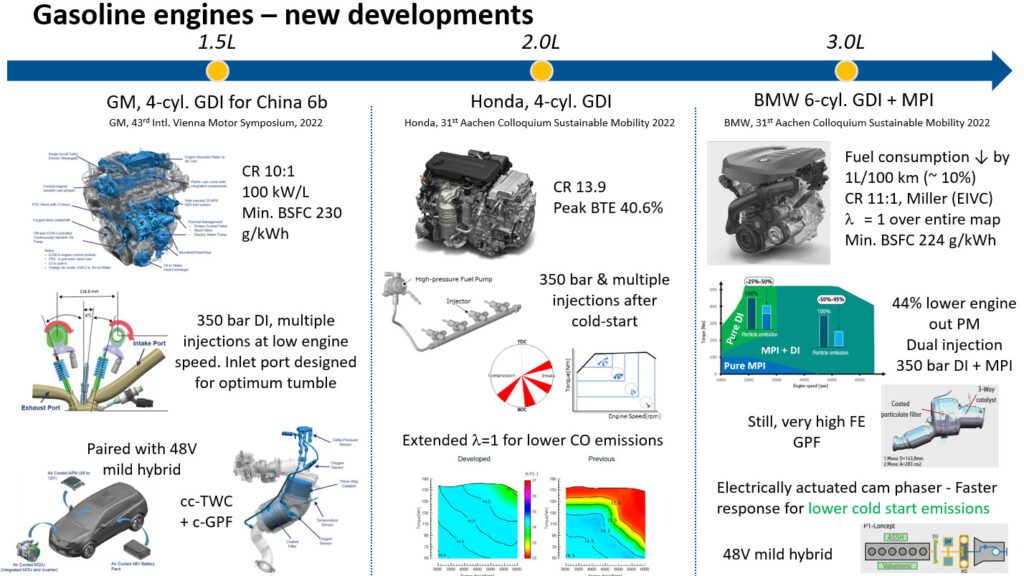
Gasoline engine new developments in 2022

Yes, OEMs continued developments of new gasoline engines in 2022. Here’s a short write-up of key technologies added covering a range of 1.5L to 3L engines.

Yes, OEMs continued developments of new gasoline engines in 2022. Here’s a short write-up of key technologies added covering a range of 1.5L to 3L engines.
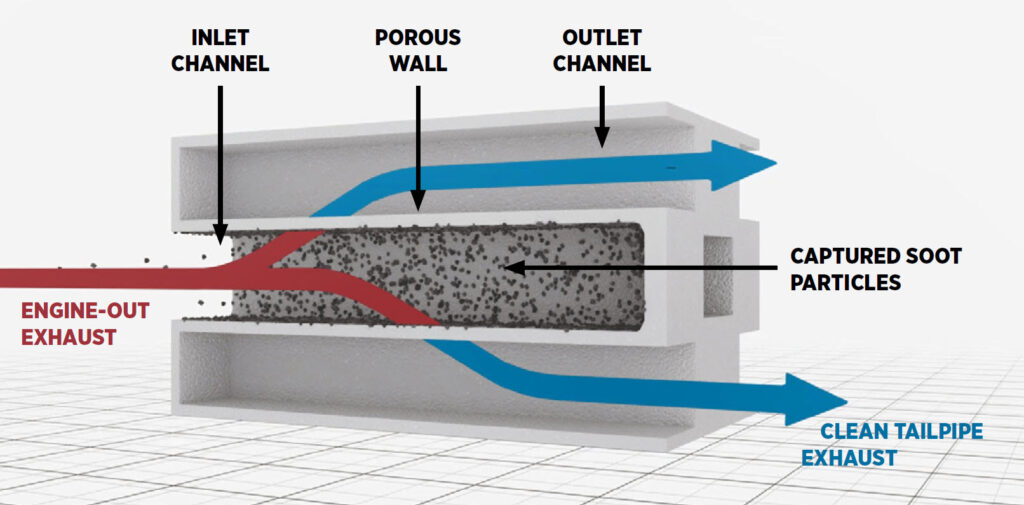
Each year, millions of people die prematurely because of exposure to fine particles emitted as a result of fossil fuel combustion. Europe and China have taken steps to address particulates from passenger cars. Upcoming US regulations provide an opportunity to catch up.
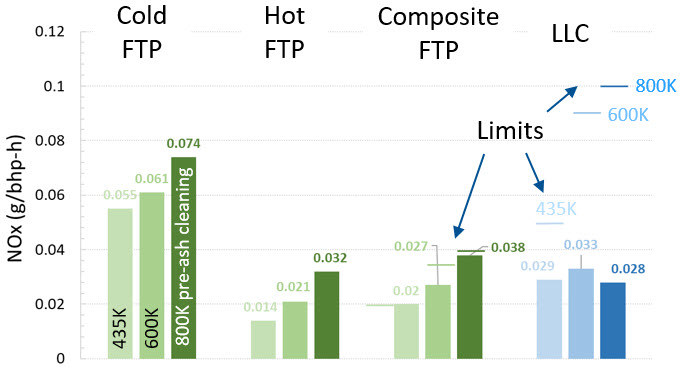
This is part 1 of 2 technology updates on pathways to meet the low NOx standards for heavy-duty vehicles set by California and being considered by the EPA for nationwide implementation starting model year 2027.

Starting with Euro 7 regulations in Europe, particles down to 10 nm will be counted and regulated, a change from the current cut-off of 23 nm, reflecting both the increasing awareness of health impact due to ultra-fine particles and also improved measurement capabilities. We give an overview of the issue.
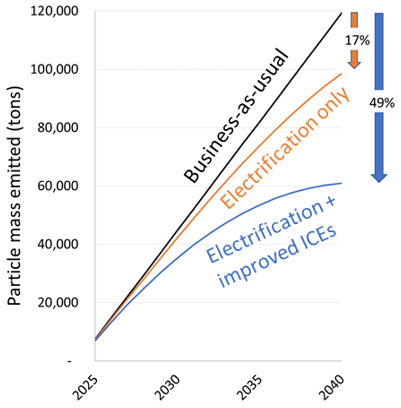
A simple calculation, taking the US as an example, to show that improving air quality for the next couple of decades will require that we continue to improve IC engines, even as electrification proceeds rapidly.
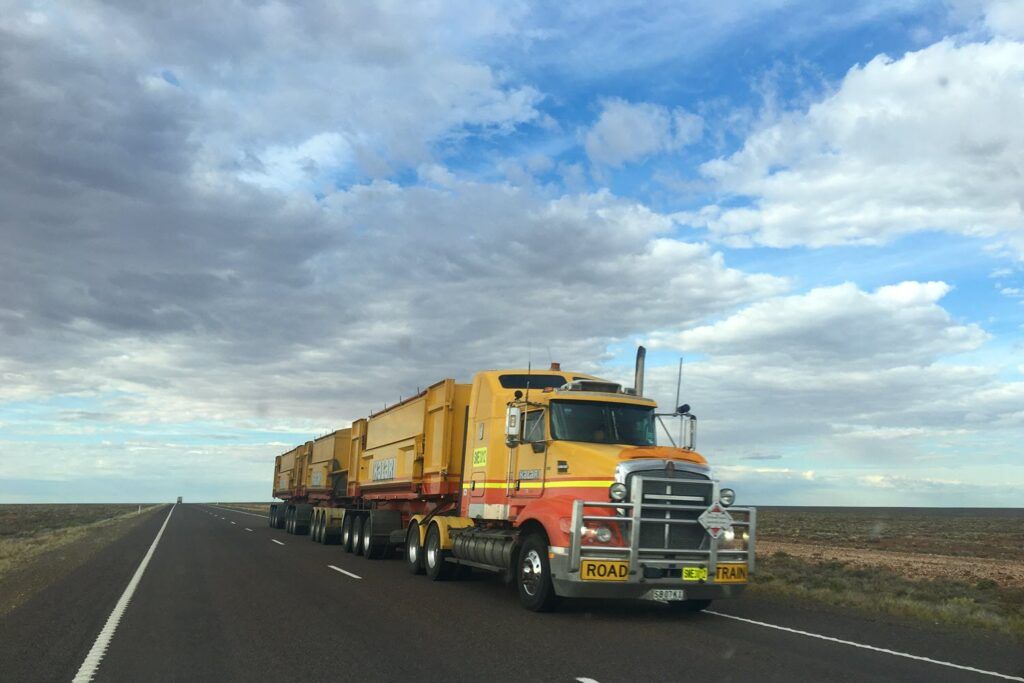
As we enter into the final lap of the SuperTruck 2 program, all teams are confident of meeting the 55% BTE and doubling-of-freight-efficiency targets. Here are the technical solutions being pursued.
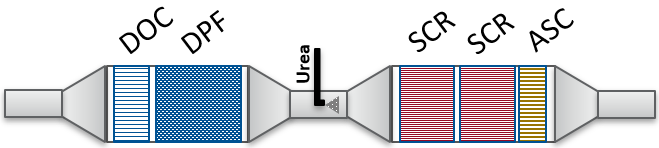
Machine Learning (ML) techniques are increasingly being used to reduce development costs and timelines for emissions control design optimization. This article provides a summary of a recent paper by a leading OEM, which discusses the approach.
Quick – what’s the biggest source of N2O ? Researchers are looking at new ways to prevent N2O formation in diesel exhaust. This article covers an example of fundamental insights of N2O formation on SCR catalysts. Read on to know more and find the answer to the question !
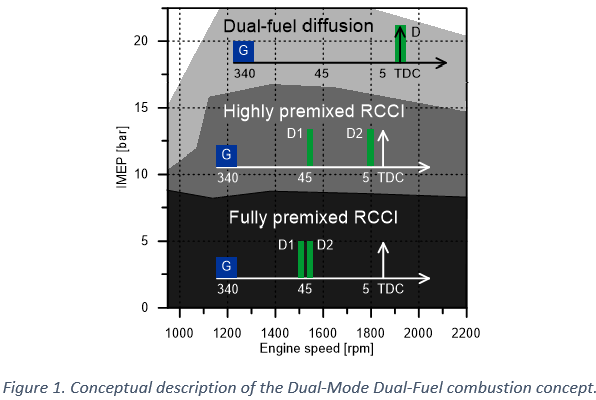
CMT-Motores Térmicos With over 40 years of experience in transportation, CMT is now combining expertise in advanced low temperature combustion, synthetic fuels and hybridization to attain deep transport decarbonization. Contact information Dr. Antonio García (angarma8@mot.upv.es) Phone: +34 963876559 Fax: +34 963876559 The success of CMT and its projects is built upon teamwork and close relationships with leading OEMs. Within the organization, the compression ignition combustion and hybrid investigation teams are combining low temperature combustion with synthetic fuels and hybridization to attain deep transport decarbonization. The following provides details on a collaborative project including CMT-Motores Térmicos, Aramco Overseas and Volvo GTT. The combustion research group has been working on extending the benefits of low-temperature combustion for several years. This effort has led to the development of the “Dual-Mode Dual-Fuel (DMDF)” combustion concept. Figure 1 provides a conceptual description. The combustion mode relies on exploring the benefits of the fully premixed RCCI combustion to the greatest extent. Nevertheless, as the combustion starts to be limited by pressure gradients, the in-cylinder equivalence ratio stratification is increased by means of modifying the injection timing of the high reactivity fuel. Figure 2 shows the benefits of DMDF on lowering engine-out NOx and soot emissions,
Centers of excellence around the world on clean mobility technologies Super Ultra Low Energy and Emission Vehicle (SULEEV) Center SULEEV (Super Ultra Low Energy and Emission Vehicle) is a leading research center in Korea, funded by the Ministry of Science and ICT. Launched on June 1st, 2016, the center aims to commercialize high-efficiency vehicles and gas exhaust purification systems. Participants Hyundai Motor Company Heesung Catalysts Co. Blueplanet Co. Ceracomb CBB Co. EnD Solutions Clue Life Center Organizations and Research Contents Group 1: Design of catalyst for low-temperature vehicle exhaust purification Professors Sung June Cho, Hyun Joo Lee, and Jeong Woo Han Group 1 is devoted to developing novel metal oxidation catalysts and metal oxide reduction catalysts based on fundamental understanding of relevant surface reactions determined from computational tools. Group 2: Design of a multi-purpose (catalyst/adsorbent) filter Professors Kwan-Young Lee, Ki Bong Lee, Hyun Wook Jung, Jung Kyu Choi, and Dae Won Lee Group 2 aims to develop a filter than can both serve as a catalyst and adsorbent. More specifically, catalysts for low-temperature combustion of PM (particulate matter) and high-capacity adsorbent for NOx and HC designed for low-temperature adsorption and high-temperature desorption are being developed. Group 3: Design of