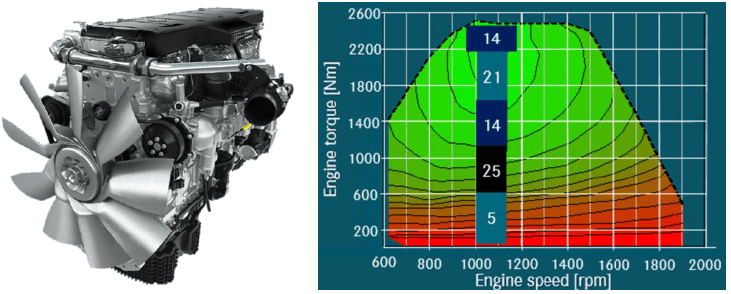
Daimler’s new 15L heavy-duty engine

Daimler Truck has improved it’s 15L engine for Class 8 long-haul trucks in North America. This article covers a few of the discussed improvements.

Daimler Truck has improved it’s 15L engine for Class 8 long-haul trucks in North America. This article covers a few of the discussed improvements.
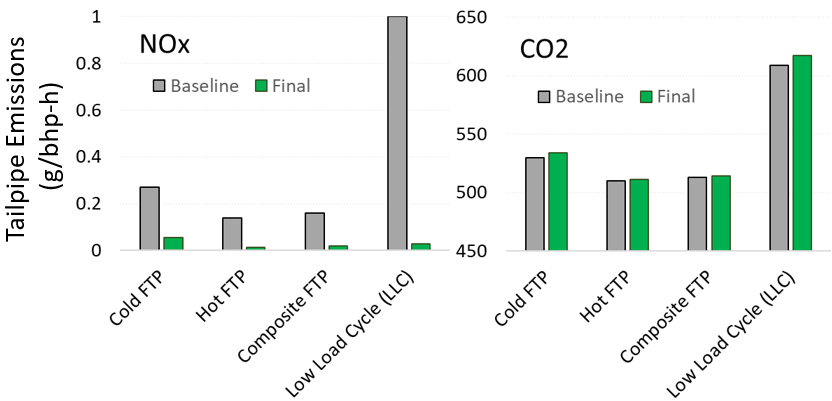
Achieving 90% reduction in NOx emissions from heavy-duty vehicles California’s Low NOx Omnibus will be phased in through model years 2024 – 2031 and will require >90% reductions in tailpipe NOx emissions from heavy-duty trucks. This is a high-level summary of a multi-year program led by Southwest Research Institute to demonstrate the feasibility of achieving these targets. Background Starting back in 2014, California’s Air Resources Board (CARB) initiated a program to evaluate the feasibility of reducing tailpipe NOx emissions from heavy-duty vehicles by 90%. Southwest Research Institute (SWRI) has led this comprehensive study in three stages, through implementation of advanced engine and after-treatment solutions. A key objective of the study was to demonstrate meeting the upcoming NOx standards without incurring a significant fuel or CO2 penalty. For a quick overview of California’s low NOx Omnibus rule starting 2024, the reader is referred to this link. Summary A combination of modified engine calibration, implementation of new hardware and an advanced after-treatment system with close-coupled catalyst was implemented. After accelerated aging representative of 435,000 miles, the final tailpipe levels were at 0.02 g/bhp-h on the FTP cycle, right at the Low NOx Omnibus target. Even on the challenging low load cycle, NOx
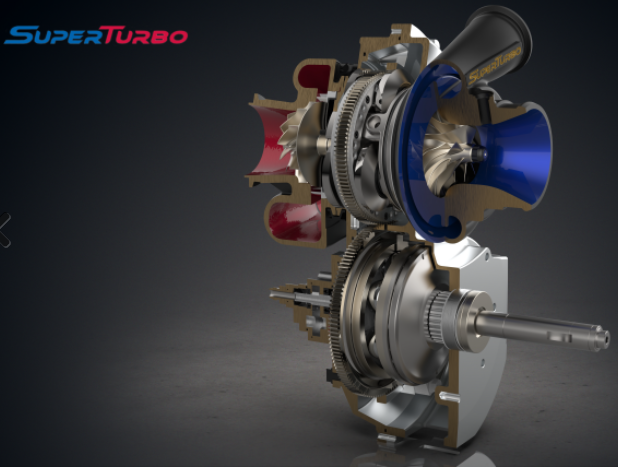
SuperTurbo with Turbine Bypass for Cold Start Aftertreatment Heating Upcoming regulations such as California’s Low NOx Omnibus and Euro VII will require >90% reductions in tailpipe NOx emissions from heavy-duty trucks. This is a series providing a summary of various technologies which can help meet these challenging regulations. What is a SuperTurbo? SuperTurbo is a driven turbocharger that has the capability of mechanically transferring power to and from the turbo shaft, enabling both compounding of excess turbine energy, as well as supercharging capability for improved transient response and greater control over charge flow. This supercharging capability also allows for a complete turbine bypass to be used during engine cold start, while still providing boosted airflow to the engine. For heavy duty diesel engines, this ability to supercharge during times of zero flow to the turbine is important to retain drivability and functionality of the engine. The turbine bypass directs the hot exhaust gasses directly to the aftertreatment, resulting in rapid heating of the aftertreatment during a cold start. See the end of this article for a short video which explains the bypass operation. Benefits for lower NOx emissions SCR inlet temperatures over cold WHTC cycle Preliminary testing of the SuperTurbo
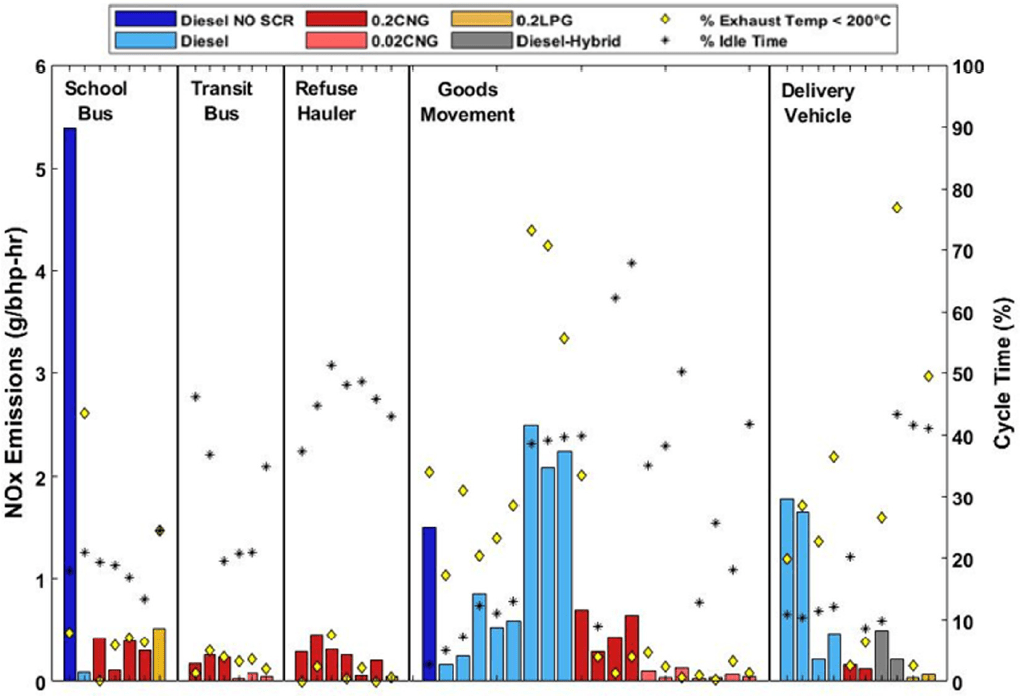
In-use NOx emissions from heavy-duty trucks and buses Journal Paper Review : Real-world NOx emissions from heavy-duty diesel, natural gas, and diesel hybrid electric vehicles of different vocations on California roadways Science of the Total Environment 784 (2021) 147224 Background This is one of the largest studies in California on measurement of in-use NOx emissions from 50 heavy-duty trucks and buses for various vocations. The fleet included 2 diesel vehicles without SCR (selective catalytic reduction of NOx), 14 diesels with SCR, 2 diesel hybrids, 29 compressed natural gas (CNG) and 3 liquified petroleum gas (LPG) vehicles. Emissions were measured using portable emissions measurement systems (PEMS) and on actual driving routes and applications (e.g. transit buses making stops and refuse trucks making the rounds collecting garbage and delivering to landfills). All vehicles had less than 435,000 miles of prior driving, so that these were within the useful life requirements. This is a good database to identify future potential of advanced powertrain & after-treatment technologies as we move towards the Low NOx regulations starting 2024 – 2027. Key Takeaway (1) Compared to diesel vehicles with SCR technology, CNG vehicles certified to 0.02 g/bhp-h standard emitted 94% lower NOx. LPG vehicles
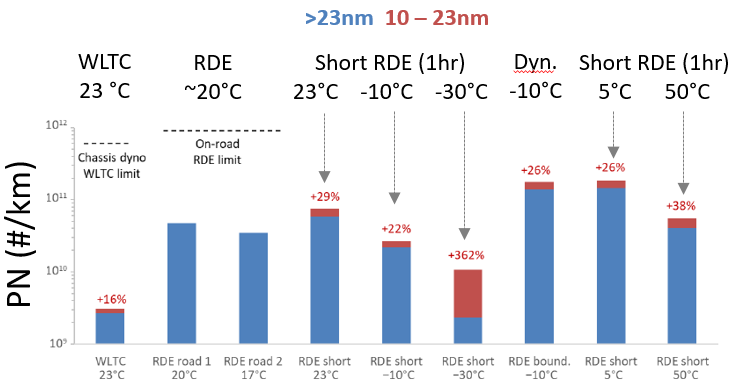
GPFs work well under wide operating conditions. But, very higher filtration will be needed for Euro 7. Journal Paper Review : Particle Number Emissions of a Euro 6d-Temp Gasoline Vehicle under Extreme Temperatures and Driving Conditions https://www.mdpi.com/2073-4344/11/5/607 Background Tailpipe particle number (PN) measurements were done on a Euro 6d-temp vehicle with a close-coupled TWC and uncoated GPF in the underfloor position. Ambient temperature and driving conditions were varied. Key Takeaway (1) The tailpipe PN emissions were well below the Euro 6d limit over a wide range of ambient temperatures (-30 to + 50 C), when driving aggressively (dynamic RDE) and under stop & go conditions (“Transport for London, TfL” test), and even when including particles down to 10 nm. Key Takeaway (2) Tailpipe PN emissions were low even at very low ambient temperatures. Surprisingly the emissions peaked at 5 deg C and not at the lowest temperature (PN is expected to increase with low ambient temp. due to fuel impingement on colder surfaces and incomplete combustion). However, the authors point out that a dynamic RDE test was done before the testing at 5 C, so that the filter was most likely passively regenerated and was in a “clean” state (i.e. without
Let’s put things in perspective first. Brake thermal efficiency was ~ 35% in 1960. In 2020, Weichai announced a 50% BTE commercial engine (more details on Dieselnet). And the US Department of Energy’s SuperTruck 2 program is targeting 55% BTE next year. At least two participants announced this year that they are close to 53%. Navistar, Book chapter in “Alternative Fuels and Advanced Vehicle Technologies for Improved Environmental Performance”, 2014 doi:10.1533/9780857097422.2.225 Here are some enabling technologies that the participants are pursuing to achieve 55% BTE and doubling of freight efficiency. Improvements include those at the engine, transmission and vehicle level. Also included are model based control of the drivetrain and emissions systems. The table below shows some of the options being evaluated by each of the participants at the engine level. Common elements include light thermal barrier coated pistons, high compression ratios, Miller cycle, high efficiency turbochargers, waste heat recovery and close-coupled SCR. The program enters its final year and we will see whether the participants can demonstrate achieving the targets at the DOE Annual Merit Review in 2021. See you there.