

Policy Update
US Clean Fuels Policy is Shifting - Are you ready?
A summary of the proposed EPA Renewable Fuels Standard and the revised Section 45Z Clean Fuel Production Credit.
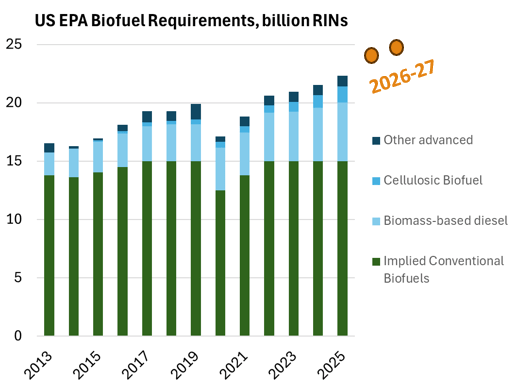
EPA’s 2026–2027 RFS Proposal: Tighter Rules, Bigger Goals
RIN requirements up 9.5% from 2025 to 2027.
Domestic biofuels favored — credits for imported fuels cut by 50%.
Biomass-based diesel volumes set to jump 70%.
Renewable electricity (eRINs) removed from the RFS.
Section 45Z Clean Fuel Production Credit: What’s New?
The tax credit is extended through 2029 for clean transportation fuels produced in the U.S.
$1.00 per gallon baseline credit — with a bonus for sustainable aviation fuel (SAF).
Lifecycle GHG emissions must be below 50 kg CO₂e/mmBTU.
Crop-based fuels like ethanol and soy diesel are back in play, with ILUC emissions excluded.
Imported used cooking oil under scrutiny.
Download full policy brief (members only) below for:
Credit calculation formulas
GREET model updates
Anti-stacking rules
Detailed fuel eligibility criteria
Full implications of the 2027 RFS
Want the full version?
Subscribe to MobilityNotes for expert insights that help you navigate policy, tech, and market shifts in the transport decarbonization space.
MOBILITYNOTES MEMBERS: Click below to download a PDF with the full summary.
Sign up here to receive such summaries and a monthly newsletter highlighting the latest developments in transport decarbonization
5-Min Monthly
Sign-up to receive newsletter via email
Thank you!
You have successfully joined our subscriber list.
Recent Posts

EPA Demands Manufacturer Data as It Expands Action on DEF System Failures
![]()
A brief summary of recent EPA changes to DEF-related failures.

EPA repeals 2009 GHG endangerment finding
![]()
The US EPA is repealing the 2009 GHG endangerment finding and terminating all vehicular GHG standards.
Efficiency of EVs in US and China
![]()
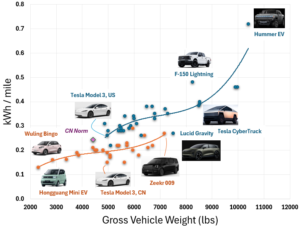
China has set energy efficiency norms for electric vehicles – how do modern EVs fare?