



Regulations
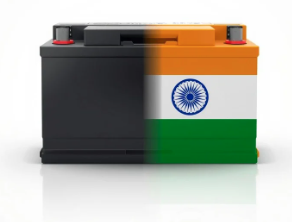
India issues "Battery Pack Aadhaar" Guideline
Issuing Authority: Ministry of Road Transport & Highways (MoRTH), Government of India
CLICK HERE for official document
As the use of batteries and critical minerals used therein increases across major markets, governments and regulatory agencies are issuing new standards on battery packs from a sustainability lens and to ensure transparency for end consumers. India is the latest to issue such guidelines, here is a quick overview.
The Battery Pack Aadhaar (BPA) framework establishes a unique digital identity for battery packs to enable end-to-end lifecycle traceability, improve safety and accountability, and support India’s circular economy and battery waste management goals. It is designed to integrate battery data across manufacturing, use, repurposing, and recycling.
Scope
(a) Covered batteries
- Electric Vehicle (EV) battery packs
- Industrial batteries with capacity > 2 kWh
(b) Excluded batteries
- Starting, Lighting & Ignition (SLI) batteries
- Portable consumer batteries
Core Requirement: Battery Pack Aadhaar Number (BPAN)
- Each battery pack must be assigned a unique 21-character alphanumeric Battery Pack Aadhaar Number (BPAN).
- Responsibility: Battery producer or importer.
- BPAN must be permanently affixed to the battery pack and accompanied by a QR code.
- New BPAN required if a battery is recycled, repurposed, or materially altered.
Data Architecture
Battery Pack Aadhaar comprises three integrated data layers:
1. Static Data (Manufacturing Stage)
- Manufacturer identity
- Battery chemistry, capacity, voltage
- Material composition
- Carbon footprint information
Encoded in the BPAN and QR code.
2. QR Code Data
- Offline-accessible static attributes : Enables basic identification by authorized users without system access
3.Dynamic Data (Lifecycle Stage)
- State of Health (SoH)
- Charge/discharge cycles
- Thermal events and usage history
- End-of-life or repurposing status
Stored on a central digital platform and updated throughout the battery lifecycle.
Access & Data Governance
- Public access: Limited to static battery information via BPAN/QR.
- Restricted access: Dynamic and sensitive data available only to authorized stakeholders (manufacturers, recyclers, regulators).
- Centralized data system enables compliance monitoring.
Stakeholder Obligations
- Battery Producers / Importers
- Generate and assign BPAN for every eligible battery pack.
- Physically label battery with BPAN and QR code.
- Upload and maintain lifecycle (dynamic) data.
- Ensure upstream data availability from suppliers.
- Cell & Module Suppliers
- Provide accurate technical and material data to support BPAN generation.
- Government / Regulators
- Oversee system implementation.
- Conduct audits and ensure compliance with reporting obligations.
Sign up here to receive such summaries and a monthly newsletter highlighting the latest developments in transport decarbonization
5-Min Monthly
Sign-up to receive newsletter via email
Thank you!
You have successfully joined our subscriber list.
Recent Posts

EPA Demands Manufacturer Data as It Expands Action on DEF System Failures
![]()
A brief summary of recent EPA changes to DEF-related failures.

EPA repeals 2009 GHG endangerment finding
![]()
The US EPA is repealing the 2009 GHG endangerment finding and terminating all vehicular GHG standards.
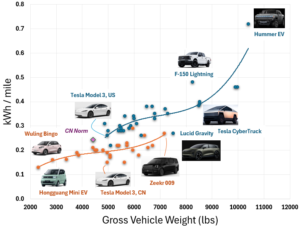
Efficiency of EVs in US and China
![]()
China has set energy efficiency norms for electric vehicles – how do modern EVs fare?